


Founding Attorney
Investor-State Dispute Settlement (ISDS) frameworks have long stirred discussions on their implications for the sovereignty of nations and have several sovereignty impacts.
Situated at the nexus of international investment, government authority, and legal adjudication, ISDS mechanisms authorize investors to initiate proceedings against host states, potentially challenging domestic policies and regulations.
With the increasing occurrence of cases where firms brandish ISDS as a weapon to dissuade nations from enforcing environmental and social reforms, the matter of how these frameworks affect a nation’s autonomy becomes pivotal.
Grounded in various trade and investment treaties, including NAFTA and the evolving Transatlantic Trade and Investment Partnership, ISDS’s influence on the rule of law within host countries merits a careful and critical examination.
Keep reading to unpack the delicate interplay between international arbitration and state sovereignty.
Key Takeaways
- ISDS Mechanisms Present a Complex Balance Between Investor Rights and Sovereign State Autonomy
- Renegotiations of Trade and Investment Treaties Aim to Address Power Imbalances Within ISDS
- Sovereign Nations Are Preemptively Aligning Domestic Policies With ISDS Standards to Avoid Disputes
- Recent Reforms Highlight a Trend Towards Enhancing State Autonomy Within ISDS Frameworks
- Discussions Continue on the Global Stage for ISDS Reforms That Respect National Sovereignty and Rule of Law
Exploring the Definition of Sovereignty in ISDS

The concept of state sovereignty sits at the bedrock of international law, wielding considerable influence over the architecture of international relations and economic collaborations.
As nations navigate the complexities of international trade, the nexus between the esteemed principle of sovereignty and the mechanisms of Investor State Dispute Settlement (ISDS) emerges as a focal point of legal and political discourse.
The ISDS frameworks, which are integral to trade agreements such as the North American Free Trade Agreement (NAFTA), the Transatlantic Trade and Investment Partnership (TTIP), and investment treaties, serve as a litmus test for the durability of sovereign prerogatives in the face of cross-border investment activities and disputes.
This examination takes on increased gravity considering the interplay of these frameworks with the autonomy of governments to govern without external coercion—a principle that lies at the heart of the United Nations Conference on Trade and Development.
The subsequent analysis will trace the origins of state sovereignty, contextualize it within the purview of international law, and scrutinize how ISDS platforms potentially recalibrate the balance of power between investors and host nations.
Tracing the Origins of State Sovereignty
The roots of state sovereignty can be traced back to the Peace of Westphalia in 1648, often heralded as the foundational moment that crystallized the concept of nation-states with definitive territorial boundaries and the authority to govern without outside interference. This historic point marks a transition in which the nations began to sculpt the modern international system that undergirds contemporary diplomatic relations and law.
Since then, the evolution of sovereignty has been propelled by the confluence of legal tenets and the rise of institutions designed to fortify the rule of law among states. The interlocking structure of national autonomy and international engagement presents a dynamic canvas upon which the narratives of sovereign rights and mutual cooperation have continuously been reinterpreted in light of shifting global paradigms.
Sovereignty in the Context of International Law
Sovereignty operates as the compass guiding international law, determining the scope within which governments assert their power and interact on the global stage. Its essence permeates the foundational documents and conventions that prescribe the conduct of nations, framing the boundaries of legal and political agency for sovereign bodies.
In the theatre of international trade, sovereignty delineates the contours of authority, allowing host countries to negotiate trade agreements with the assurance of their domestic objectives taking precedence. The negotiation process, crafted by experienced negotiators, culminates in the creation of bilateral or multilateral pacts often accompanied by a chapter on investment disputes:
| Trade Agreement | Signatory Nations | Key Sovereignty Provision |
|---|---|---|
| NAFTA | Canada, Mexico, United States | Chapter 11: Investment Disputes |
| TTIP | EU Member States & United States | Inclusion of ISDS Mechanism |
| Trans-Pacific Partnership | Various Pacific Rim Nations | Investment Chapter: Dispute Settlement |
These provisions stand testament to the sovereignty respected within dispute settlement mechanisms, ensuring that the host state’s right to regulate remains intact and protected while also offering fair recourse to affected parties.
How ISDS Frameworks Interact With Sovereignty
The interlacing of ISDS frameworks with state sovereignty marks a nuanced recalibration where private parties, such as investors or companies, are furnished with the mechanism to initiate claims against host governments under allegations ranging from expropriation to non-compliance with investment agreements. The intricate dynamics of ISDS allow for these disputes to be assessed outside national courts, often by arbitral tribunals, who evaluate the actions of the host country against the commitments outlined in investment treaties, fostering an arbitration ecosystem that endeavors to be insulated from domestic partialities.
Under these frameworks, host states are compelled to juxtapose their sovereign interests with their obligations to foreign investors, thereby testing the resilience of their autonomy. The existence of entities like The International Centre for Settlement of Investment Disputes (ICSID) and the adherence to principles set forth by trade agreements serve to emphasize the rule of law in mediating these disputes, although critics argue it may at times constrain the nation’s sovereign right to enact policies in favor of public interest, casting a spotlight on the balance ISDS seeks to maintain between investor protection and host state sovereignty.
Analyzing the Role of ISDS in State Autonomy

The Investor State Dispute Settlement (ISDS) system, while originally crafted to offer protection and fair treatment to international investors, poses an increasingly debated influence on the autonomy of state decision-making.
By permitting private entities to legally challenge government actions, ISDS has thrust itself into the spotlight, revealing cases where its rulings could potentially override the legislative or regulatory decisions of sovereign states.
Such instances raise concerns about the equilibrium between upholding investor rights and preserving the legislative freedoms of host countries.
As such, this intricate interaction warrants thoughtful examination of how ISDS mechanisms, through their decisions, may encroach upon or respect the delicate balance of power that defines state sovereignty and its capacity to govern independently.
How ISDS Can Influence Domestic Policy Decisions
The gravitas of ISDS mechanisms extends into the legislative chambers of host states, where the specter of international arbitration may sway domestic policy-making. An ISDS tribunal’s power to adjudicate disputes involving investment treaties may influence a host nation’s regulation landscape, as policymakers weigh the potential for costly claims against changes to laws that could impact foreign investments.
In navigating the terrain between sovereign autonomy and investor assurances, host governments face the daunting task of harmonizing their policy objectives with the obligations imposed by ISDS clauses. This delicate balancing act underscores the silent, yet formidable role ISDS plays in shaping a nation’s internal decisions on matters such as environmental regulations, labor laws, and public health measures.
Cases Where ISDS Has Overridden State Decisions
When sovereign decisions fall under the gaze of ISDS tribunals, the results can stir robust debate on the intersection of international law and national governance. Instances where tribunals have concluded that governmental actions, such as regulatory changes, amount to indirect expropriation have led to decisions that compel states to compensate investors, effectively reshaping policy landscapes despite government intentions.
This phenomenon is reflected in the annals of ISDS litigation, with several high-profile cases exemplifying the profound impact these rulings can have on the political autonomy of a host country:
- A case where environmental regulations implemented by a government were deemed as detrimental to an investor’s expectations, resulting in a significant settlement.
- An instance in which new labor protections threatened the profitability of a foreign company, prompting ISDS intervention and subsequent policy revision.
These occurrences demonstrate the stark reality that while ISDS aims to maintain a balance between investor protections and sovereign interests, the scales can tip, with nations sometimes facing the sobering prospect of amending regulations under the pressure of international arbitration outcomes.
The Balance Between Investor Protection and State Autonomy
The equilibrium between shielding investor interests and preserving sovereign rights often requires nations to carefully assess the implications of their domestic policies in light of potential ISDS claims. As host countries strive to uphold their autonomy, they must also consider the commitments made under international investment agreements and the possible repercussions of breaching such accords.
Host states grapple with the challenge of maintaining a regulatory environment that fosters development while honoring the legal protections guaranteed to foreign investors. The tension between these objectives is a testament to the intricate dance of diplomacy that ISDS embodies, where the sovereignty of a nation is consistently weighed against the security promised to international capital.
ISDS and Its Impact on National Legislative Power
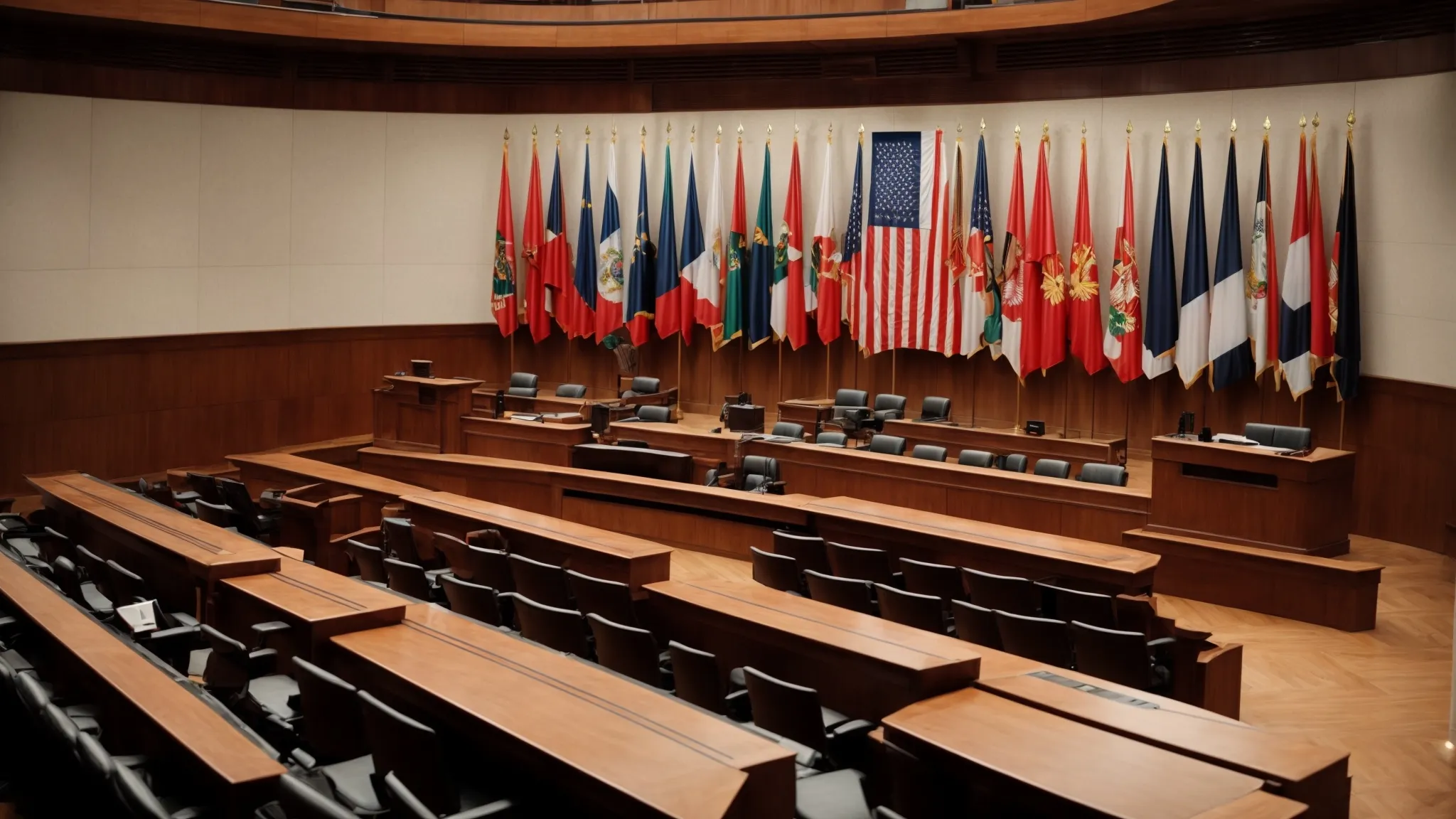
Amidst the intricate fabric of international relations and complex trade agreements, Investor State Dispute Settlement (ISDS) stands as a critical component in determining the power balance between preserving national legislative authority and honoring international commitments.
This subsection introduces readers to the influential presence of ISDS in shaping legislation across nations, exploring the delicate interplay between global accords and the sovereignty of local legal frameworks.
Furthermore, the examination unpacks the strategies nations may employ to assert their legislative sovereignty while remaining compliant with the tenets of ISDS, highlighting the continuous negotiation between preserving state autonomy and fulfilling the expectations of international investors.
Instances of ISDS Influencing Legislation
The capacity of ISDS to shape national legislative frameworks has been demonstrated in numerous instances, where the specter of arbitration compels lawmakers to adapt legislation to align with international investment standards. Such alterations reflect the consequential nature of ISDS, as its processes may necessitate transformations in host country laws to preempt challenges and avoid the financial liabilities that could arise from adverse arbitration outcomes.
Countries have sometimes refrained from enacting robust environmental standards or progressive labor regulations, wary of inciting litigation through ISDS channels that could deem such measures to be inhibitive to foreign investments. This self-regulatory consequence of ISDS emphasizes its indirect, yet potent, influence on a nation’s legislative sovereignty, manifesting through tempered policies at the prospect of international scrutiny and arbitration claims.
The Tension Between International Agreements and Local Laws
The tension between international agreements and local laws is not just theoretical; it arises when the legislative innovations of a host country collide with the obligations under international trade and investment agreements. The friction materializes as governments grapple with advancing progressive agendas that can potentially contravene stipulations reserved for the protection of foreign investment interests.
To navigate this precarious balance, nations often reevaluate their legal provisions to ensure congruity with international obligations, an endeavor that may circumscribe their legislative ingenuity. This recalibration underscores the sovereignty implications of ISDS, as it sometimes necessitates the alignment of national laws with the investor-focused imperatives of international agreements.
Strategies for Preserving Legislative Sovereignty Under ISDS
To mitigate the sovereignty impacts that Investor State Dispute Settlement (ISDS) may impose, host nations often engage in preemptive legal fine-tuning to ensure their legislation aligns with international standards. These strategic moves, orchestrated by legal experts and policymakers, aim to reinforce the host state’s legislative framework in a manner that reduces the likelihood of ISDS disputes while asserting the nation’s policy prerogatives.
Moreover, countries may adopt robust reservation clauses within their investment treaties and trade agreements, specifically delineating areas where national sovereignty is to be upheld against any ISDS claims. This serves as a bulwark for the host government, enabling it to maintain legislative agility and sovereignty, particularly in sensitive sectors such as public health, environmental protection, and social welfare.
The Effect of ISDS on Environmental and Social Regulations

Investor State Dispute Settlement (ISDS) mechanisms bear profound implications for the environmental and social fabric of nations.
These arbitration processes challenge the capacity of governments to implement protective regulations without facing potentially costly claims from international investors.
As nations court sustainable development, the intersection of ISDS claims with environmental conservation, the renovation of social policies, and the integration of public welfare considerations come under intense scrutiny.
The subsequent discussion will unwrap the complex tapestry of how ISDS influences these critical areas and explores the intricate balancing act of aligning investor protection with the imperative of public interest.
How ISDS Claims Challenge Environmental Protection Efforts
In the quest to safeguard the environment, host states enacting stringent regulations may find themselves entangled in ISDS claims, initiated by investors who perceive such measures as detrimental to their economic interests. This dynamic pits the sovereign right of nations to protect their natural resources against the rights of investors to receive fair treatment as stipulated within investment treaties, creating a fundamental tension within international law.
ISDS claims can challenge environmental protection efforts by labeling them as indirect expropriation, compelling governments to carefully balance their ecological priorities with the risk of costly arbitration awards. The pressure of facing potential ISDS litigation could lead to a chilling effect on a nation’s resolve to implement or maintain vigorous environmental regulations, potentially impeding progressive environmental policy.
The Influence of ISDS on Social Policy Reforms
The interplay between ISDS adjudications and social policy reforms embodies a complex dance of jurisprudence and governance. Social policy reforms, whether they seek to enhance labor unions’ rights, improve public health initiatives, or adjust welfare benefits, might inadvertently trigger ISDS claims if foreign investors view these reforms as impinging upon their guaranteed investment returns.
It is within this realm, where ISDS emerges as a critical player in shaping social legislation, that host nations are prompted to innovate within the confines of international legal obligations. The specter of ISDS litigation looms over social reform, potentially influencing the trajectory and substance of policies aimed at advancing the well-being of the citizenry:
- Initiating labor reforms that favor workers may expose the host government to claims of altering the business environment for companies.
- Implementing public health regulations that limit certain profitable activities could be construed as indirect expropriation under ISDS scrutiny.
- Revising tax laws to benefit lower-income residents might be challenged as discriminatory against foreign investors’ interests.
Thus, ISDS mechanisms wield considerable power in the social arena, possibly deterring nations from pursuing aggressive policy overhauls that could incur international arbitration—highlighting the delicate balance sovereign states must maintain between domestic welfare and transnational economic commitments.
Balancing Investor Interests With Public Welfare in ISDS Cases
The adjudication process inherent to Investor State Dispute Settlement (ISDS) cases presents a complex arena where the public welfare proposals of host states can be juxtaposed against the commercial interests of foreign investors. These scenarios often require tribunals to weave through the dense fabric of international investment law, striving to achieve a just equilibrium that respects the host nation’s social and environmental objectives while acknowledging investors’ legitimate expectations.
In ISDS cases, the dual concerns of protecting public welfare and ensuring fair treatment for investors mandate that arbitrators render decisions which delicately balance these sometimes competing interests. The outcome of such cases can significantly influence global perceptions of a country’s commitment to the rule of law and its dedication to upholding the rights of its population against the backdrop of international investment agreements.
Examining Consent and Power Imbalance in ISDS

Investor State Dispute Settlement (ISDS) embodies the delicate nexus of sovereignty, consent, and power within the vast expanse of international investment.
The centrality of state consent in initiating and operating ISDS procedures underpins the legitimacy and perceived equity of these arbitration systems.
Yet, the subtle undercurrents of power dynamics between states and multinational corporations expose inherent asymmetries that may influence the trajectory of ISDS outcomes.
Against this backdrop, nations and institutions are increasingly focused on mitigating power imbalances, with treaty renegotiation emerging as a pivotal tool in this recalibration.
This introductory exploration sets the stage for in-depth discussions on the significance of state consent, power relations between diverse international actors, and how strategic negotiations are reshaping the landscape of ISDS to foster a more balanced interplay between capital interests and sovereign rights.
The Significance of State Consent in ISDS Mechanisms
In the intricate web of ISDS, state consent acts as the threshold for legitimizing the involvement of international arbitral tribunals in resolving investment disputes. Such consent is typically enshrined within the provisions of investment treaties and trade agreements, thereby granting an arbitrator the authority to adjudicate disputes between the host country and the foreign investor.
Consent within the ISDS framework primes a responsive and controlled domain where host states and investors negotiate with a mutual understanding of the procedural landscape outlined by existing accords: a journey from the pact to protocol, authority to action.:
- Engagement begins when nations integrate ISDS clauses within international investment agreements, signaling consent to arbitration processes.
- Recognition of arbitrator authority follows, where the legal bounds of the ISDS mechanism are accepted.
- Action takes place upon the filing of a claim, instigating the confirmation of state consent, and activating the dispute settlement proceedings.
Power Dynamics Between States and Multinational Corporations
The tables of diplomacy are often tilted when multinational corporations enter the arena of ISDS, bringing substantial economic leverage and legal resources that can overshadow the less resource-rich states. Accusations that these corporations exert undue influence on the outcomes of disputes reflect the concern that power imbalances may skew proceedings in favor of the capital-rich parties, potentially challenging the host state’s ability to uphold its policy space and sovereignty.
Despite the principle of equality before the law promised under ISDS guidelines, the reality that unfolds within the arbitration rooms sometimes paints a different picture, with states grappling to match the legal prowess that multinational entities wield. In this dance of jurisdictional power, the sovereignty and governance of nations can be caught in a tightrope walk, negotiating terms with entities whose influence transcends national borders and enters the realm of global economic force.
Mitigating Power Imbalances Through Treaty Negotiation
As the dynamics of international investment shift, host nations and multinational corporations increasingly recognize the need for more equitable frameworks, giving rise to treaty renegotiations that aim to address power imbalances in ISDS.
This movement toward redressing the scales of justice finds nations working collaboratively to integrate provisions that afford greater protection to the sovereignty of host countries, ensuring a fairer resolution process amidst the ebb and flow of global economic currents:
| Treaty Renegotiation Focus | Objective | Impact on Power Balance |
|---|---|---|
| Clarifying Sovereignty Parameters | Define the limits of state obligations to foreign investors | Strengthen host nation’s regulatory autonomy |
| Amending Dispute Resolution Clauses | Introduce transparency and multiple-party participation provisions | Reduce potential for investor bias and enhance state agency |
| Establishing Precedent and Interpretive Authority | Allow for the evolution of ISDS case law favoring state sovereignty | Empower host states in future arbitration outcomes |
Through these strategic negotiations, nations are deliberately shaping the tenor of ISDS to foster a more balanced interplay, transforming the narrative from one of dominance by international investors to a new chapter of assertive sovereignty and equitable dispute resolution.
Reform Proposals to Address Sovereignty Concerns in ISDS

The interplay between state sovereignty and the mechanisms of Investor State Dispute Settlement (ISDS) has prompted a discerning focus on reform within the ambit of international arbitration.
Scholarly debates, policy think-tanks, and administration reviews have catapulted a range of reform proposals aimed at reaffirming nations’ sovereign authority while retaining the essential fabric of ISDS.
This discourse illuminates the emerging consensus around the necessity of reforms that honor sovereign prerogatives and builds on the momentum of prior successful adjustments to the ISDS schema.
As nations and corporations contemplate transnational arbitration’s future, the proposals offer a blueprint for sovereignty-conscious ISDS frameworks that balance the scales of justice and power in the global arena.
Overview of Proposed ISDS Reforms to Honor State Sovereignty
In response to escalating concerns regarding the sovereignty impact of ISDS, reform advocates propose modifications aimed at restoring the balance between investor protection and state rights. These proposals revolve around enhancing procedural fairness and bolstering the autonomy of host nations to regulate in the public interest without fear of costly litigation.
Significant reform suggestions are centered on the following strategic focal points, designed to tailor the ISDS system to better respect sovereign decision-making:
- Restructuring arbitration protocols to increase transparency and state participation in dispute resolution processes;
- Introducing appeals mechanisms for arbitral decisions, to fortify legal certainty and rectify erroneous rulings;
- Amending treaty language to more precisely define investor rights and state responsibilities, thereby narrowing the scope for interpretation that may disadvantage host countries.
The movement towards these reforms reflects a collective recognition that preserving the rule of law and host country sovereignty is crucial, ensuring that ISDS facilitates equitable outcomes that honor the integrity of national governance structures and policy objectives. See Reforming the investment treaty regime | Brookings
Examples of Successful Reforms in Bolstering Sovereignty
Reform initiatives within the ISDS framework have evidenced success stories where sovereignty stands reinforced. For instance, the recalibration of NAFTA into the United States-Mexico-Canada Agreement (USMCA) illustrates an evolution toward greater respect for host state autonomy, especially in providing clearer definitions of what constitutes indirect expropriation.
The steps charted by recent reforms can be encapsulated as follows:
- Narrowing the scope of ISDS provisions to reduce the volume of cases against host nations;
- Enhancing the role and impact of joint interpretative statements by signatory states to guide tribunal deliberations;
- Ascertaining that ISDS mechanisms do not undermine the ability of governments to act in legitimate public interest.
Another notable stride came from the Comprehensive Economic and Trade Agreement (CETA) between the EU and Canada, where an innovative Investment Court System was introduced, featuring a tribunal and appellate body designed to enhance consistency and judicial integrity. These reforms underscore the deliberate movement to mollify concerns of sovereignty erosion by embedding structural adjustments within the ISDS paradigm that prioritize national prerogatives and the rule of law.
Future Directions for Sovereignty-Conscious ISDS Frameworks
The trajectory of ISDS reform is shifting toward a landscape where the harmonization of international investment with state sovereignty is paramount. Recognizing the frictions within current frameworks, ongoing discussions at forums like the United Nations Conference on Trade and Development (UNCTAD) and the World Trade Organization (WTO) highlight the pursuit of systems that are more responsive to the prerogatives of host states while still providing robust protection for foreign investors.
Emergent models of ISDS are envisaging mechanisms in which the rule of law is paramount and the roles of arbitrators are clearly defined to prevent overreach into sovereign affairs. In a worldwide push to recalibrate power dynamics, there’s a concerted effort to establish ISDS procedures that bring equilibrium between corporate interests and the welfare of host nations, ensuring that international arbitration supports sustainable development goals and respects domestic policy space.
The Role of ISDS in Balancing Sovereignty
Understanding the sovereignty impacts of Investor-State Dispute Settlement (ISDS) is essential as it has significant implications for the balance between national autonomy and foreign investor protections.
ISDS mechanisms can influence domestic policy decisions, which may lead to a recalibration of sovereign rights to regulate in favor of public interest.
Sovereignty-conscious ISDS frameworks that respect state decision-making authority are vital, and ongoing reform discussions aim to reconcile the needs of investors with the rights of host states to self-govern.
Such reforms propose increased transparency, clearer definitions of state and investor obligations, and better binding interpretative mechanisms to safeguard host nation sovereignty.
Recognizing the pertinence of these issues enables nations to navigate and negotiate international investment dynamics more effectively, ensuring that both host countries and investors can thrive within a fair, balanced, and respectful system.